Courtesy of Wikipedia.org
What if we turned our thinking upside down? What if conservative members of the U.S. Supreme Court aren’t Donald Trump’s lackeys but are afraid of him? How would that affect their interpretation of our Constitution?
In school, most of us were taught that our government consisted of three co-equal branches: Congress, the Executive, and the Supreme Court. The Legislative branch drafted laws, the Executive administered them, and the Courts determined if the laws and regulations complied with our Constitution.
History suggests, however, that this “equality” is only partially true. Much of the Court’s power derives not from the Constitution but from duties it assigns to itself. Article 111 of the Constitution makes no mention, for example, of the Court’s power to decide upon legislative actions. One line of that text, in fact, suggests the Court is precluded from doing so without the legislature’s permission. In all the other Cases before mentioned, the Supreme Court shall have appellate Jurisdiction, both as to Law and Fact, with such Exceptions, and under such Regulations as the Congress shall make.
In an earlier blog post, I wrote that the Court assumed the power of legislative review in Marbury v. Madison (1803), a case concerning judicial appointments. Over time, the Bench continued to expand its jurisdiction by fiat. Even so, under the Exceptions Clause (Art. III, § 2), Congress has the power to regulate and even limit the Supreme Court’s jurisdiction, a practice informally known as Court Stripping.
In addition, the Legislature determines the number of jurists on the high bench, their salaries, their departmental budget, and may, with cause, remove them from office. It even provides the toilet paper, so it’s reasonable to question the Court’s claim of independence.
Though they act as if they were autonomous, Donald Trump behaves as if they didn’t exist, unless it suits his purpose. He tore down the East Wing of the White House, for example, trusting his ballroom would be built before the courts could weigh in. He also tests their doctrines through his Executive Orders. Recently, he issued one changing requirements for mail-in ballots in the 2026 midterm elections.
Whether he has that right to do so is one question. Whether his order, coming less than 70 days before the vote, falls within the Court’s major question doctrine is another. The doctrine speaks to the timeliness of an action. If the judges decide there isn’t enough time to implement the Presidential order, Trump has two choices. He can accept the ruling, or he can ignore it, arguing that it doesn’t apply to the Presidency.
When the Executive branch finds itself at loggerheads with the Supreme Court, who decides? The Constitution is mute on the question, and the country faces a constitutional crisis.
Chief Justice Roberts sees the danger, which is why I suggest that fear, as well as ideology, may explain some of the jurists’ curious decisions. Presidential immunity, a doctrine found nowhere in the Constitution, is an example. Rather than face a crisis, it may have been crafted to appease the President’s galloping avarice while leaving other impediments in place.
I offer this speculation because the Court and the Executive seem to be engaged in a dangerous dance. When the music stops, citizens could find their justice system demolished and that their country is in the hands of a dictator.
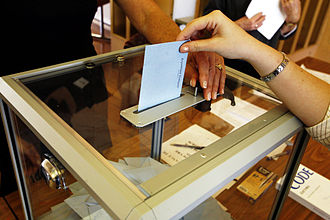
If we believe our Constitution, we know that voters make the final decision. If they choose freedom, they will vote early, in large numbers, and encourage others to do the same.
Practical Magic:
Saturday, October 17 is the next “No Kings Day.” Find an event near you
Volunteer to be a poll worker: Power the Polls.
BOYCOTT: Tesla, Apple, Amazon