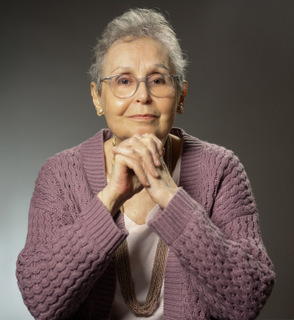
Courtesy of wikipedia.org
The fall season marks the election of a new building representative at my retirement complex. I don’t know the woman. She’s new to us. But I’m sure that after she chairs her first meeting, I’ll receive an email with a smiley face from her. “We missed you,” it will read.
Hopefully, a fellow resident will clue her in. “Don’t bother. She never shows up.”
No, I don’t attend meetings. Before I signed my contract with the retirement center, I insisted upon personal freedom. Retirement is my time.
To conclude that I am shy or antisocial would be wrong. A politician, as I have been, couldn’t survive as an introvert. Nonetheless, I admit that I have lived the bulk of my life outside the beehive. Simply put, I’ve never felt the need to “go along to get along. “
In the 1950s, a group of sociologists wrote the book “The Lonely Crowd.” In it, they tried to explain loners like me, but, over time, their thesis fell out of fashion. That’s not unusual in research. When psychopaths turned out to be prevalent in our society, the condition was no longer considered to be a mental illness.
Now, there is a new effort to describe those who resist group membership and assimilation. My readers will be glad to know the condition isn’t a mental illness. And being an Otrovert, as it’s called, has some advantages. Two of these are “originality and emotional independence.” (“The Power of One,” by Rami Kaminski, New Scientist, Aug. 16, 2025, pg.19)
Other qualities, according to psychiatrist Rami Kminski, are that Otroverts “have no fear of social rejection[and], no need to convince anyone of anything.” Ironically, not inclined to focus on the group, Kaminski explains that Otroverts will devote themselves to “deepening bonds with [those] they feel close to. (Ibid. pg. 19)
If this new personality type fits some of my readers, welcome to the club. I send you my goodwill through time and space, confident that you won’t reply by suggesting that we schedule a meeting.
BOYCOTT TESLA