Courtesy of wikipedia.org
It’s not just me. It’s you. It’s all of us! Modern life is blowing our minds, according to recent behavioral studies. Evolution molded us to live in small groups with people we know and trust, not in cities surrounded by a multitude of strangers.
Worse, the internet has exacerbated the difficulties. We interact not only with our families and communities, but also in the vast electronic world of social platforms where we compare ourselves to strangers. The technology shows me I’ll never be as wise as Norm Chomsky or as glamorous as Angelina Jolie. And yes, I also know these idols date me.
AI will compound our problems, inundating us with more information than our brains can handle. Some of this knowledge will be inaccurate and some of it won’t. How will we know the difference? Not knowing invites angst. Will robots take our jobs? Enslave or exterminate us? Even the inventors don’t know. AI’s godfather, Geoffrey Hinton, left Google years ago, warning that the system posed an existential threat to humanity. (“AI for the People,” by Ro Khanna, The Nation, May 2026, pg. 24.)
The world’s first trillionaire disagrees. Elon Musk believes AI will provide incredible abundance for all. The technology has worked for him. But can we trust this oligarch? After his failures as the head of Doge, I’m not inclined to do so. After all, he and his cohorts have options the rest of us don’t. Like Peter Thiel, they can take their money and run to Argentina. Or, failing that, they have underground bunkers to wait out Armageddon.
Signs of psychosis are evident everywhere, especially among our leaders. Donald Trump has dragged us into the Iran war with no explanation and no exit plan. His decision to build a new battleship doesn’t comport with his asymmetrical wars where drones are not only the weapons of choice but are in short supply.
Insane decisions have insane consequences. The dearth of American weaponry has forced Ukraine to manufacture drones for itself in its war with Russia. They’ve become so proficient that other countries are lining up to buy them. Our customer has become our competitor.
Another irony is that the camouflage in our military uniforms is so good, even the Taliban use it. (“The Rise of Digital Camo,” by Avery Trufelman, Wired, May/June 2026, pg. 49.)
The theft of our technology may be a compliment, but to stay ahead, the United States is in a perpetual arms race with itself. That race gives us little time to consider outcomes.
The Y2K crisis is a perfect example. At the close of the twentieth century, programmers became aware that they’d provided no algorithm for the calendar change. Would the World Wide Web implode, they wondered. They hadn’t a clue. Needless to say, when 2000 chimed in, the event was more than a celebration. It was a nail-biter.
We are a slow-witted species, rooted to the past and blind to the future. No one should be surprised that in this modern world, the World Health Organization reports that over a billion of the eight billion people on the planet have mental health problems. And the madness is growing.
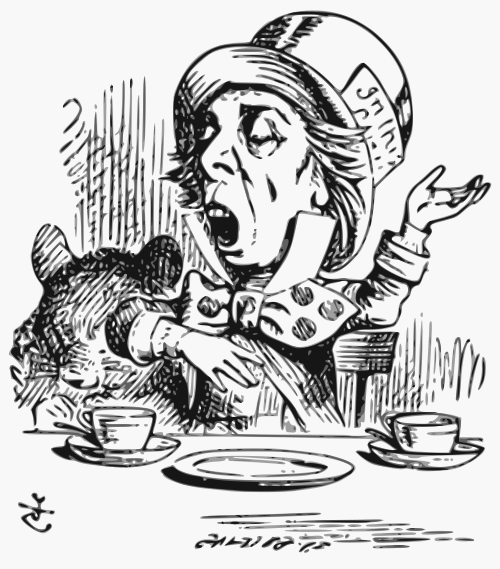
Perhaps it’s time for Americans to stop living like hamsters on an exercise wheel. Let’s initiate positive change with the midterm elections. I’m not talking about the defeat of one party over another. Some of the people on both sides of the aisle strike me as mad as hatters.
I’m talking about dropping the culture wars politicians use to divide us. I’m talking about dropping labels, conservative, liberal, socialist… We should focus on what we hold in common. I’ve never visited Coweta County, Georgia, but if I ever did, I’d stand shoulder to shoulder with the residents in their protest against data centers.
I have faith in the people’s collective wisdom. It isn’t perfect. Sometimes juries send innocent individuals to prison. But I’m clear on one thing. A majority of us honor truth, decency, and integrity. That’s my tribe, and we should stick together.