Courtesy of wikipedia.org
Tax time is almost here, a period when, like the cartoon character Snoopy, we wish we could write the IRS asking to be removed from their mailing list. People little realize that taxes are a form of power because a bureaucracy funded by taxpayers is beholden to them. Cut that “umbilical” cord, and the government dies.
Donald Trump has thought a lot about taxes. I’m not referring to tariffs. I’m referring to his efforts to bypass Congress’s budget process. His proposal to divert Venezuelan oil money to a foreign bank account under his management is an example. With Venezuelan oil revenues, he could fund a private army.
Elizabeth Warren, the ranking Democrat on the Senate Finance Committee, sees the danger in his attempt. There is no basis in law for a president to set up an offshore account that he controls so that he can sell assets seized by the American military. That is precisely a move that a corrupt politician would be attracted to.
Stephen Kotkin, Senior Fellow at the Hoover Institution, reminds us why mineral wealth—diamonds, gold, rare earths, and oil—is the darling of tyrants. It is a reliable source of funds. Vladimir Putin has survived years of political boycotts by other nations because he controls vast oil and gas reserves. (“The Weakness of the Strongmen,” by Stephen Kotkin, Foreign Affairs, Jan/Feb. 2026, pg. 15.)
In addition to creating a bank account in Qatar for his oil money, Trump has begun investing tax dollars in private corporations. Doing so poses a conflict of interest for the government, obliging it to regulate industries in which it owns shares. But for Trump, that conflict is a good thing. It makes him the world’s largest insider trader.
When the connection between government funding and the people erodes, the people should worry. Over time, the voter becomes as superfluous to the government as workers in an automated factory.
Finding ways for money to flow outside the traditional systems aligns Trump with the oligarchs. For example, both favor cryptocurrency for financial transactions. In the murky world of electronic blips and bleeps, money disappears with little or no accountability to a government or bank.
Already the tech industry is so prosperous, I suspect it is the first without the need for government grants or legislative protection. To the contrary. All it wants is to be free of regulations.
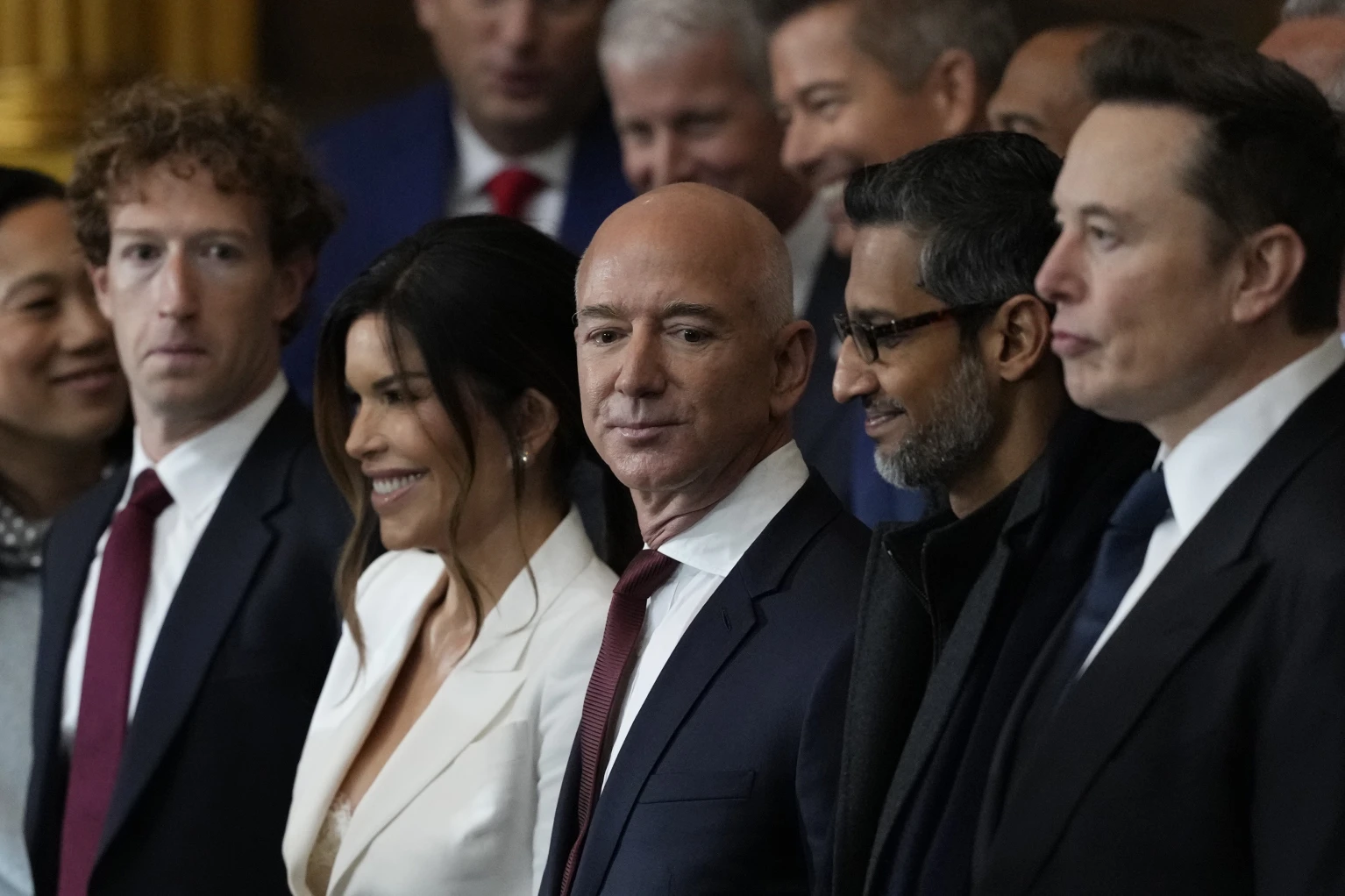
Oligarchs like Elon Musk promise a world of bliss if we give them their way. Musk, for example, envisions a future with no need to work. Living in an automated world, he promises, people will look forward to immeasurable leisure. This is the same Musk, remember, who, as the director of Doge, gutted the worldwide humanitarian program, USAID. According to some estimates, that decision resulted in 1.1 million deaths in the first year of the cuts and will add another 1.6 million deaths each succeeding year.
Rather than rely on Musk’s promises, I’m inclined to heed the words of Geoffrey Hinton, the Godfather of AI. He admits that the coming automation will mean job losses, making a few people much richer and most people poorer.
An unfettered oligarchy endangers our democracy. Even so, when there is talk of boycotts to reign them in, too many roll their eyes. “I need one day delivery and cheaper prices,” they cry.
I smile in sympathy when I hear them. Who doesn’t like convenience and a sale? Nonetheless, I must reply that while oligarchs like Jeff Bezos grow stronger, we the people grow weaker.
Rest assured, the super-rich make no connection between their prosperity and the consumers who created it. Just as factory owners paid no attention to the welfare of workers until labor unions were born, oligarchs feel no obligation to the society that allows them to thrive.
Larry Page and Sergey Brin of Google, and venture capitalist Peter Thiel, are current examples. They are spending millions of dollars to oppose California’s billionaire wealth tax. That investment strikes them as a better deal than paying their fair share.
BOYCOTT: Tesla, Amazon, and Apple